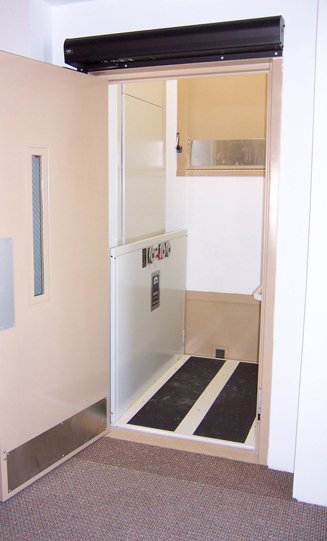
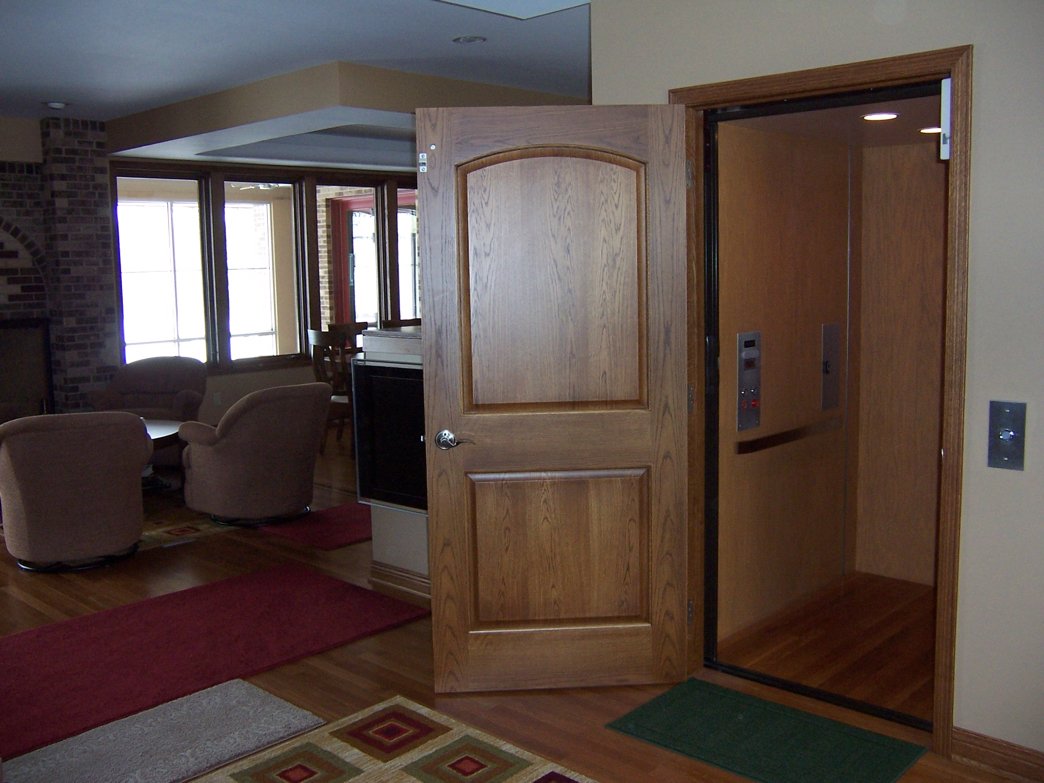
Residential / Home Elevator Frequently Asked Questions (FAQs)How much will it cost? You really need to contact the sales staff at Premier Lift Products, Inc. to get accurate pricing. Many factors affect the final installed cost of an elevator. However, listed below are some of the parameters that will determine the price of your home elevator: The number of floors (stops) the elevator will serve. The kind of machine to be used (Compact winding cable drum, Overhead winding cable drum, Overhead traction or Roped hydraulic). The total number of feet the elevator will travel. The number of door openings there will be in the elevator cab. Standard size (36" wide x 48" deep) or larger cab sizes. Standard cab interior or optional cab interior upgrades. Any other options such as raised panel cabs, power gates, power doors, etc. Another big variable in completed project cost is the construction of the hoistway. The cost of a hoistway constructed in a new home is usually minimal. The cost of a hoistway constructed in an existing home can vary dramatically based on site conditions. [Back to Elevator page] What is the difference between cable drum, traction and hydraulic drives? All home elevators use cables or chains to move the cab from one level to another, the difference is in how those cables or chains are propelled… Hydraulic units use a hydraulic piston or jack to push on a loop of cable connected to the car that moves the car up at a 2:1 lift ratio as the piston extends. Because of the 2:1 lift ratio, a jack hole is not needed like you may see on some direct drive commercial elevators. Winding drum units simply have the support cables wrap on a large spool or drum to move the car up and down. Traction drive units use counterweights to balance the weight of the car. The motor simply moves the weights down as the car goes up via cables or chains. Other differences: In years past, a big difference between the machine types for the home owner was that hydraulic elevators offered two features that others elevator drives did not… “emergency battery lowering in case of power failure” and “variable speed soft starts & stops”. That has changed! Today, nearly all home elevators have an emergency battery lowering device & variable speed as standard features. The standard VVVF (variable speed variable frequency) drive on winding drum and traction drives softens the starts and the stops… the feel is nearly identical to riding in a hydraulic elevator. Even though the VVVF drive on traction and winding drum units is quiet, the hydraulic units are typically the quietest. See “How big does the machine room need to be?” for additional differences. [Back to Elevator page] What kind of guarantee/warranty is available? Most residential elevator manufacturers provide a 2-year limited parts warranty. Premier Lift Products, Inc. compliments the manufacturer's warranty by including a limited 1-year labor warranty on all our installations. [Back to Elevator page] What kind of interiors can I get? Base car finishes typically include a selection of melamine finishes or unfinished hardwood veneers such as oak or birch. If you want a step up, choose one of our Premier Luxury cab interiors. A variety of beautiful raised panel cabs are available. Your interior choices are all solid hardwoods and can be clear-coated or unfinished, Wood species include: oak, cherry, walnut, mahogany, maple, alder, ash and others. Lastly, let your own taste be your guide. If you choose a standard cab with an unfinished hardwood veneer you can paint it or stain it any color you want. You can also use your own finish carpenter to add architectural details to truly personalize your home elevator. [Back to Elevator page] What will the elevator look like in my house? The outside of the elevator hoistway looks like all of the other interior walls and doors you have in your home. Except for the hall pushbutton station which will be located on the wall near to the door handle and the interlock which is located on the door itself, you won’t even be able to tell it’s an elevator until you open the door. [Back to Elevator page] What is standard on an elevator and what is an option? Everything you need to have a working elevator is included in the price you will be given by the Premier Lift Products sales staff. The options are strictly up to you. [Back to Elevator page] What options are recommended? Any option you choose is at your discretion. Working closely with the Premier Lift Products, Inc. sales staff will help you understand what options are best for you, your lifestyle, and your home design. The most important thing is to make sure the elevator size and features will meet your needs today and into the future. [Back to Elevator page] How big does the hoistway need to be? For a standard 36" wide x 48" deep (clear inside) elevator, with all doors on the same side a 52" wide x 56" deep clear inside shaft is typically needed. [Back to Elevator page] How long does it take to manufacture an elevator? After we send the "approved" drawings back to the manufacturer, it can take anywhere from 4 to 8 weeks to manufacture. Full “approval” requires the home owner or contractor/builder and Elevator Project Superintendent to field verify all the dimensions & selections necessary to make the elevator fit into your home. All of these selections are documented on the elevator blue prints called “shop drawings” [Back to Elevator page] How long does it take to install an elevator? This answer is dependent on the progress of the construction or remodeling of your home. Quite frequently, our installers can get most of this work done very quickly (typically 3-5 days), however if hallway doors are not hung, wall finishes not complete or electrical power & phone service are not ready, the elevator cannot be finished and turned over. Additionally, the elevator cannot be turned over until it has been inspected and approved by the local or state elevator inspector. The inspection itself is typically performed near the end of the construction project, just before the “final inspection” by the local building inspector. [Back to Elevator page] How deep does the pit need to be? Most home elevators require the pit to be 6”-8" deep – below the top of the basement floor. If you want to add your own flooring to the elevator cab, allow for a 1”-2” deeper. Too deep is always better than too shallow. Contact the sales staff at Premier Lift Products, Inc. for details. [Back to Elevator page] What size (hoistway and/or cab) does the elevator need to be for a wheel chair? The minimum recommended cab size is 36" wide x 48" deep. However, we have seen a trend of wheelchairs becoming larger over the years, so bigger is better where wheelchairs are concerned. Elevator code allows the cab to be up to 15 square feet, with our two most popular cab sizes being 36" wide x 60" deep or 40" wide x 54" deep. Remember, the size of the hoistway will vary according to the cab size, drive style, the number of door openings in the cab, and where the openings are located (in-line, opposite or 90 degree adjacent). Never begin construction without the actual lay-out drawings for your specific application. [Back to Elevator page] Is a machine room required? Yes and No. It depends on the **type of drive** and your specific situation … for a more detailed answer, read the answers to the next question regarding elevator machine rooms. How big does the machine room need to be? That depends on the **type of drive** and your specific situation… **Standard winding cable drum elevators with the machine is typically located at the lowest level to the side of the elevator, but the location is also very flexible and can be located on the second floor or even the third floor in certain applications. All that is required for what we call the “Compact Side Drive” is a 16" deep enclosure called the “Machine Build Out” at one level of the home. **Overhead machines, whether a winding drum cable drive or traction drive, does not require a “machine room”. All that’s required is 9’ of overhead clearance at the top landing and a location outside of the hoistway to locate the elevator’s control cabinet – typically in a storage or utility room. The machine mounts to the top of the guide rail and can be serviced from an access door typically located above the elevator entry door. **Hydraulic elevators typically require a machine room that is 4’ x 4’ and can be located just about anywhere–the basement or garage (depending on ambient temperature). Using a lockable pump unit and controller allows us to place the elevator equipment in a store room or the utility room with-out the need for a “dedicated machine room” (assuming proper working clearances are provided in accordance with NEC regulations). Site conditions, local elevator codes & building codes dictate the machine space requirements so contact the sales staff at Premier Lift Products, Inc. for details. [Back to Elevator page] How do I need to frame the walls to support the elevator? Framing requirements vary with each model of elevator. We will provide framing details for all of our home elevator models. Contact the sales staff at Premier Lift Products, Inc. for more details. [Back to Elevator page] What is the difference between Premier Lift Products, Inc. and the competition? Premier Lift Products, Inc. is a family owned and operated business that has a wealth of experience and a rich heritage of customer service. Read more about the background of Premier Lift Products, Inc. [Back to Elevator page] Also see our general Frequently Asked Questions page for information on code compliance and funding sources. Home | Products | Services | Gallery | FAQ | Privacy Statement | Contact Us Telephone: 507-444-9802 Toll Free: 800-373-9802 Fax: 507-444-9803 |